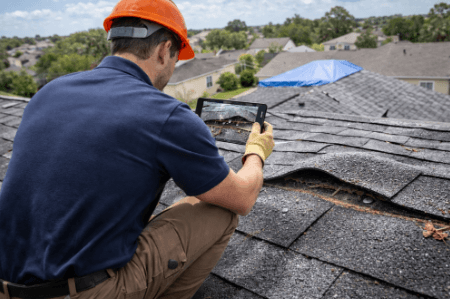
Wind damage rarely starts as a dramatic roofing failure. More often, it begins when a shingle loosens just enough to break its seal and lift with the next strong gust. That small movement matters because shingles are meant to lie flat, overlap tightly, and guide water down the roof in a controlled pattern. Once one section starts lifting, the layers below it can become exposed to moisture, sunlight, and repeated wind pressure. Homeowners looking into roof repair brigham city should understand that lifted shingles are not only a cosmetic problem. They can be the first sign that part of the roof system is becoming vulnerable.
The most useful way to think about this issue is not simply as storm damage, but as a repair problem that gets harder the longer it sits. A shingle that lifts once may settle back into place, but that does not always mean it is still secure. The adhesive strip may be weakened, the fasteners may be exposed, or the shingle itself may have creased during the movement. That is why timing matters so much with this kind of damage. A small repair handled early can stay small. A delayed repair can allow water to reach the underlayment or decking, turning a loose section into a broader roofing issue.
Why Wind-Lifted Shingles Need More Than a Quick Look
A lifted shingle can change how the roof performs in bad weather. Once the edge comes loose, wind can get under it much more easily. Each gust puts more strain on that section and on the fasteners around it. Sometimes the shingle tears. Other times, it bends enough to leave a crease, which weakens it even if it never blows off.
That is why wind damage is easy to miss from the ground. A roof can still look mostly normal while a small section is already vulnerable. A couple of lifted tabs may not seem like a major issue, but they create openings where water can slip underneath the surface. Constant sun and weather exposure can also wear those shingles down faster. What starts in one small spot can spread to the surrounding area if it is not addressed early.
What Roofers Check When Repairing Wind Damage
Repairing wind-lifted shingles is not only about pressing a tab back down. A proper repair starts with figuring out what the wind changed and whether the materials can still perform the way they should.
Roofers usually start by checking whether the shingle still has a working seal. If that seal has broken, the shingle may keep lifting unless it is properly repaired or replaced. They also look for bends or creases, because a shingle that has folded under wind pressure may stay in place for now but still be more likely to crack later.
They also pay attention to the nails and nearby shingles. Fasteners that were installed too high or that have started to loosen can make that section less secure during future storms. Wind damage often affects more than one shingle, so the surrounding area needs a close look, too. Focusing only on the most obvious spot can leave nearby pieces that have already begun to loosen.
Roof edges and flashing also need to be checked carefully. Wind tends to hit those outer sections first, especially along ridges, eaves, and other transition points. If the flashing has shifted or lifted, the repair may need to address more than the shingles themselves.
When a Lifted Shingle Can Be Repaired Versus Replaced
Not every wind-lifted shingle has to be replaced, but not every one should be left in place either. The decision depends on condition, not appearances alone.
If the shingle lifted without tearing, has not creased, and still has enough flexibility to reseal securely, a roofer may be able to repair the area without full replacement. That usually works best when the damage is caught soon after the wind event.
Replacement is usually the better option when a shingle is cracked, sharply bent, missing granules in one area, or dried out from age. Once that kind of damage is there, pressing the shingle back into place does not make it reliable again. It may look flatter for the moment, but it is still weaker than it should be and more likely to fail when the roof is exposed to more wind or rain.
The age of the roof also matters. Wind often exposes problems that were already developing. On an older roof, a lifted shingle can be a sign that the material has lost flexibility and is no longer holding up as well as it once did. In that situation, a repair might still make sense, but it should be based on the roof’s actual condition rather than the least expensive temporary fix.
Signs the Damage May Go Beyond the Shingles
A lifted shingle does not always mean the problem stops at the surface. If water has worked its way underneath, the layers below may already be affected. Underlayment can wear down after repeated exposure, and the wood beneath it can start to absorb moisture. Once that happens, the repair may involve more than replacing a few shingles.
Sometimes the first warning is not on the roof at all. It shows up inside the house as a ceiling stain, damp attic insulation, a musty odor, or wood in the attic that looks darker than it should. Those signs can mean water has already made its way past the outer roofing material.
Even if there are no indoor signs yet, the problem can still be getting worse. A loose section leaves the roof more exposed, and that weak spot can make it easier for nearby shingles to lift during the next stretch of strong wind.
That is why inspections matter after strong storms. The visible problem is not always the full problem.
See also: Top 7 eSIM Data Habits Every Frequent Traveler Should Build Before Visiting Egypt, Spain, or Bali
How to Keep a Small Repair From Becoming a Larger One
The best way to keep wind damage from getting more expensive is to deal with it before the next storm hits the same area. A lifted shingle may not look serious at first, but once that seal is broken, water can work its way underneath the surface. What could have been a basic repair can grow into damaged flashing, worn underlayment, or even soft roof decking.
It is also a mistake to assume the roof is fine just because everything looks still after the wind passes. Shingles can settle back down without actually sealing correctly again. That leaves the area exposed the next time rain or gusts move through. Scheduling an inspection after heavy wind can help catch those weak spots early and keep a minor issue from turning into a larger one.
Conclusion
Ongoing roof care plays a big part in preventing repeat damage. Keeping gutters clear helps water flow off the roof rather than backing up along vulnerable edges. Trimming branches back can reduce scraping and impact during windy weather. It also helps to pay attention to the roofline after storms, especially around edges and other areas where shingles are more likely to loosen.
A wind-lifted shingle may seem like a small problem, but it often shows up before more serious damage has the chance to develop. Taking care of it early can help protect the layers underneath and reduce the likelihood of a more expensive repair later. When homeowners need roof repair brigham city, the real goal is not just to flatten one damaged spot. It is to ensure the roof is secure, sealed, and ready to withstand the next round of weather.