By Clarke Wilson, Senior Educational Consultant & Digital Integration Specialist
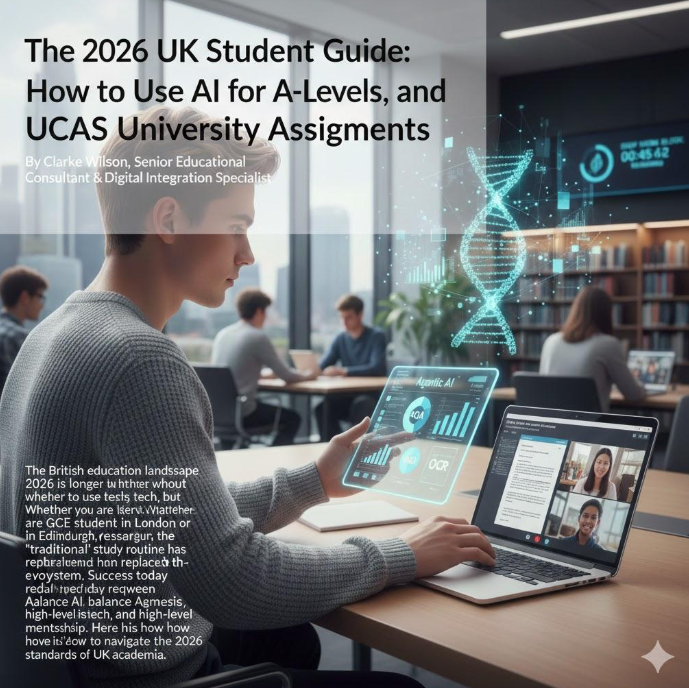
The British education landscape in 2026 is no longer about whether to use tech, but how to master it. Whether you are a GCSE student in London or a postgraduate researcher in Edinburgh, the “traditional” study routine has been replaced by a tech-driven ecosystem.
Success today requires a balance between Agentic AI, immersive tech, and high-level human mentorship. Here is how to navigate the 2026 standards of UK academia.
1. Leveraging ‘Agentic’ Partners for A-Levels and GCSEs
The biggest shift this year is the move from simple chatbots to Agentic AI. Unlike older models, these agents are tailored to specific UK exam boards like AQA, Edexcel, and OCR.
- Predictive Revision: Modern AI agents analyze your mock results and past papers to predict personal “knowledge gaps” before your finals.
- Curriculum Alignment: Agents now cross-reference the specific mark schemes used by UK examiners. This ensures your practice answers hit the “top bands” required for Grade 9s or A*s.
2. Navigating University AI Policies: The ‘Human-in-the-Loop’ Model
A common question for 2026 university students is: Is using AI for assignments considered plagiarism? Most UK institutions—including the Russell Group—now follow “Guided Usage” policies. While AI for brainstorming is encouraged, submitting raw AI text is a breach of integrity.
This is where the “Human-in-the-Loop” approach is vital. For complex dissertations or high-stakes coursework, technology cannot replace the nuanced critical thinking of a subject-matter expert.
Many students now use professional academic help from Myassignmenthelp.com to bridge this gap. Rather than relying on automation, these platforms provide access to expert human mentors who offer the editorial review and structural guidance necessary to meet rigorous UK marking criteria while maintaining 100% original thought.
3. Digital Hygiene and Student ‘Well-Tech’
With the increase in digital reliance, “Digital Hygiene” is now a core skill. Educational portals remain primary targets for cyber threats, making data privacy ethics a mandatory part of the modern student’s toolkit.
To prevent ‘Zoom fatigue,’ UK campuses have integrated Well-Tech into student portals. These AI-driven systems monitor signs of burnout, suggesting ‘deep work’ blocks when you are most alert. Additionally, many students balance these digital demands by choosing to pay someone to do my assignment through professional services, ensuring they meet deadlines while enforcing breaks to protect their mental health during exam season.
4. Boosting UCAS Applications with Micro-Credentials
The 2026 admissions cycle has seen a 40% increase in students submitting digital badges alongside traditional A-levels. Universities and 94% of UK employers now value short, tech-focused certifications stored on the blockchain.
- Evidence of Self-Direction: A micro-credential in a niche like Prompt Engineering or Data Ethics proves to UCAS admissions tutors that you are proactive beyond the standard curriculum. Developing these top soft skills UK students need in 2026 ensures that your application reflects the well-rounded profile that top-tier universities now prioritize for academic success.
- STEM Advantage: For science and engineering applicants, virtual lab certifications (conducted via VR) are now recognized by top-tier universities as valid practical experience.
See also: The Rise of Tech in Mental Health Therapy and Diagnosis
Frequently Asked Questions
Q.1 Can I mention AI usage in my personal statement?
Yes! Showing how you used AI to research a specific topic or learn a new skill—rather than just using it to write the statement—demonstrates “AI Fluency,” a trait highly sought after by 2026 admissions tutors.
Q.2 How do I ensure my work meets UK academic standards?
Always verify AI-generated insights against primary sources like Google Scholar or JSTOR. If you are struggling with the complexity of a high-stakes paper, working with a consultant through academic support services ensures your work remains critical, original, and aligned with your university’s ethical guidelines.
About the Author
Clarke Wilson is a content manager at Myassignmenthelp.com. He specializes in bridging the gap between emerging EdTech and rigorous UK academic standards, focusing on curriculum-aligned strategies for A-Levels and higher education.